
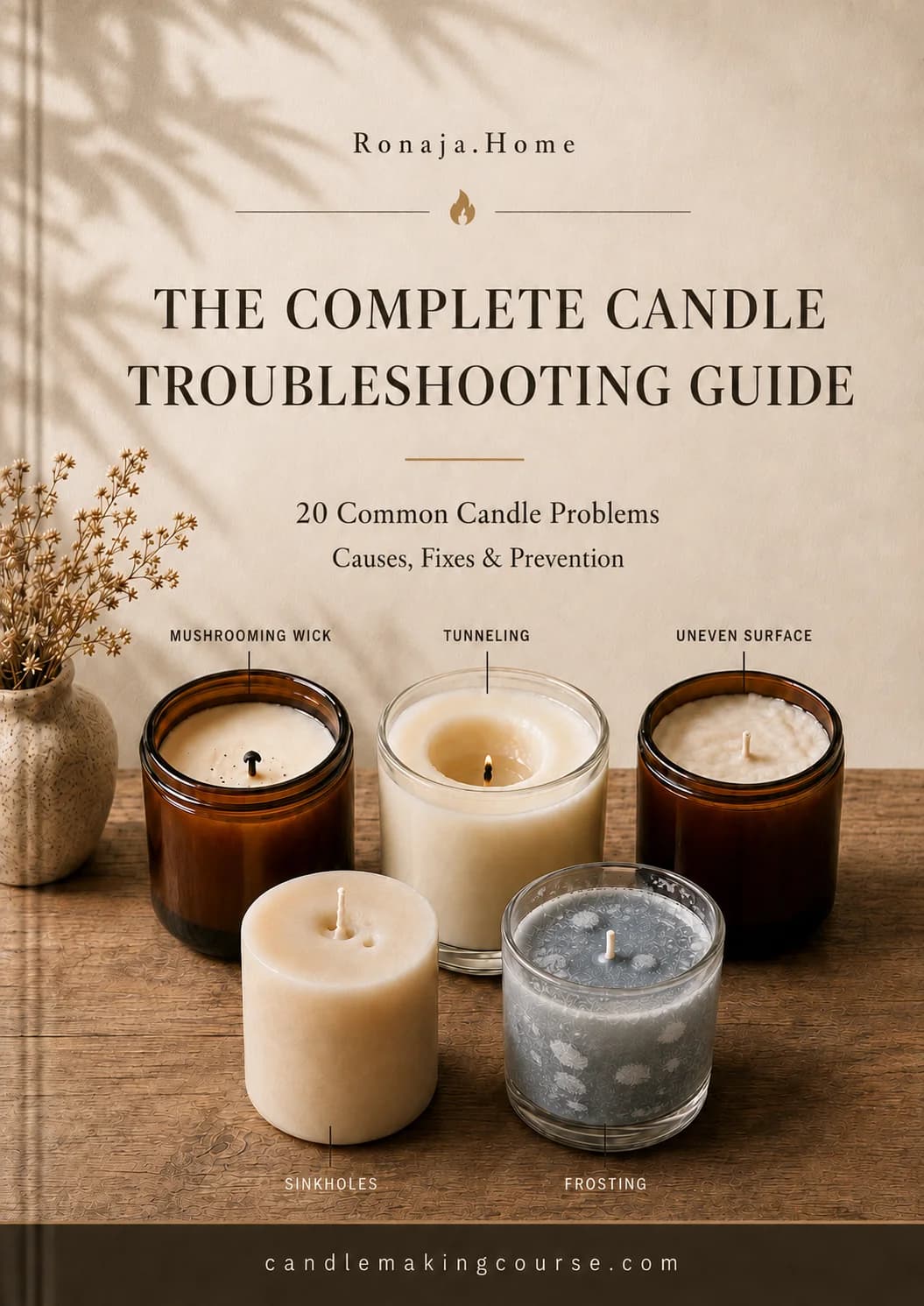
20 candle problems, and exactly how to fix each one
Sinkholes, frosting, tunneling, mushrooming wicks and weak scent throw. What the candle is telling you, why it happened, how to fix it and how to prevent it next time.
When a candle goes wrong, most people change everything at once
The candle looked perfect when you poured it. Then it cooled, and the middle sank, the top turned rough, or a white bloom spread across the surface. You light it and the flame tunnels straight down, or the wick grows a black mushroom and starts to soot.
At that point it is tempting to change the wax, the wick, the fragrance percentage, the pouring temperature and the mold all at the same time. That usually makes troubleshooting harder, not easier.
The fastest way to improve your candles is to identify the exact problem, understand the most likely causes, and then change one variable at a time. This guide is built to do exactly that.
Inside, you will find out
- How to diagnose sinkholes and repair a candle that has already cooled
- Why rough, uneven and wrinkled tops happen, especially with soy wax
- What causes frosting and white spots, and how to reduce it
- How to stop cracks forming as the candle cools
- Where air bubbles and small holes come from, and how to avoid them
- What sweating and an oily surface tell you about your fragrance load
- How to fix tunneling, uneven burns and wicks that keep going out
- How to read a flame that is too large, too small, sooting or mushrooming
- Why hot throw and cold throw fail differently, and what actually fixes each
- How to choose the right wick size and run a proper burn test
Inside the guide
Wax and surface
Sinkholes, rough or uneven surfaces, frosting and white spots, cracks after cooling, air bubbles and sweating.
Burning and wick
Tunneling, wicks that go out, uneven burn, flames that are too large or too small, soot and mushrooming.
Scent
Weak hot throw, weak cold throw, and the frustrating case of a strong cold throw with almost no hot throw.
Molds and containers
Candles sticking to the mold, containers cracking during burning, wet spots and glass adhesion, wick sizing and the burn test.
This is for you if
- Your candles look good while pouring and disappoint once they cool
- You keep hitting the same problem and cannot find the cause
- You are changing several things at once and losing track of what worked
- You are selling candles and need consistent, repeatable batches
Written by Zoriana, founder of Ronaja.Home
I have been making candles for several years, creating and selling my own designs and teaching thousands of students how to improve their candle making. Everything in this guide comes from my own testing and my own workspace, not from theory.
Questions
The 20 problems are grouped into four areas: wax and surface, burning and wick, scent, and molds and containers. Each one shows what the problem looks like, the most common reasons it happens, how to fix the candle where possible, how to prevent it next time, and a practical tip from real candle making.
Yes. It covers problems in jars and containers as well as molded pillar candles, including sticking molds and container cracking.
Often yes. Several problems, such as sinkholes and shallow surface faults, have repair steps in the guide. Others are prevented rather than fixed, and the guide is clear about which is which.
Download the PDF from your account right after checkout, and open it whenever a batch misbehaves.
Get The Complete Candle Troubleshooting Guide
Stop guessing and stop changing five things at once. Find the problem, understand the cause, fix it, and prevent it on the next batch.
One-time payment · Lifetime access
Want all four guides? See the bundle